 Money-back guarantee













Canine osteoarthritis: what you need to know to avoid making it worse
Osteoarthritis is a chronic and degenerative joint disease that affects a large number of dogs of all breeds. It causes pain, stiffness, and loss of mobility. But the good news is that with simple steps, you can greatly improve your companion's quality of life.
Your dog must remain active
Many owners think that a dog with osteoarthritis should avoid any exertion. This is a misconception!
-
Complete rest worsens the situation: inactivity promotes joint stiffness and muscle wasting.
-
Adapted activity is essential: prioritize regular, short but frequent walks, rather than long, intense outings. Swimming is also an excellent gentle exercise for the joints.
-
The objective: maintain muscle mass and mobility without overloading the joints.
A substantial intake of omega-3 can make a difference
Diet plays a major role in managing osteoarthritis. Omega-3 fatty acids, particularly EPA (eicosapentaenoic acid) and DHA (docosahexaenoic acid), found in fish oil, have shown a beneficial effect:
-
Anti-inflammatory action: they reduce inflammation in the joints.
-
Improved mobility: several studies have shown that osteoarthritic dogs receiving omega-3s had a better ability to walk and less pain.
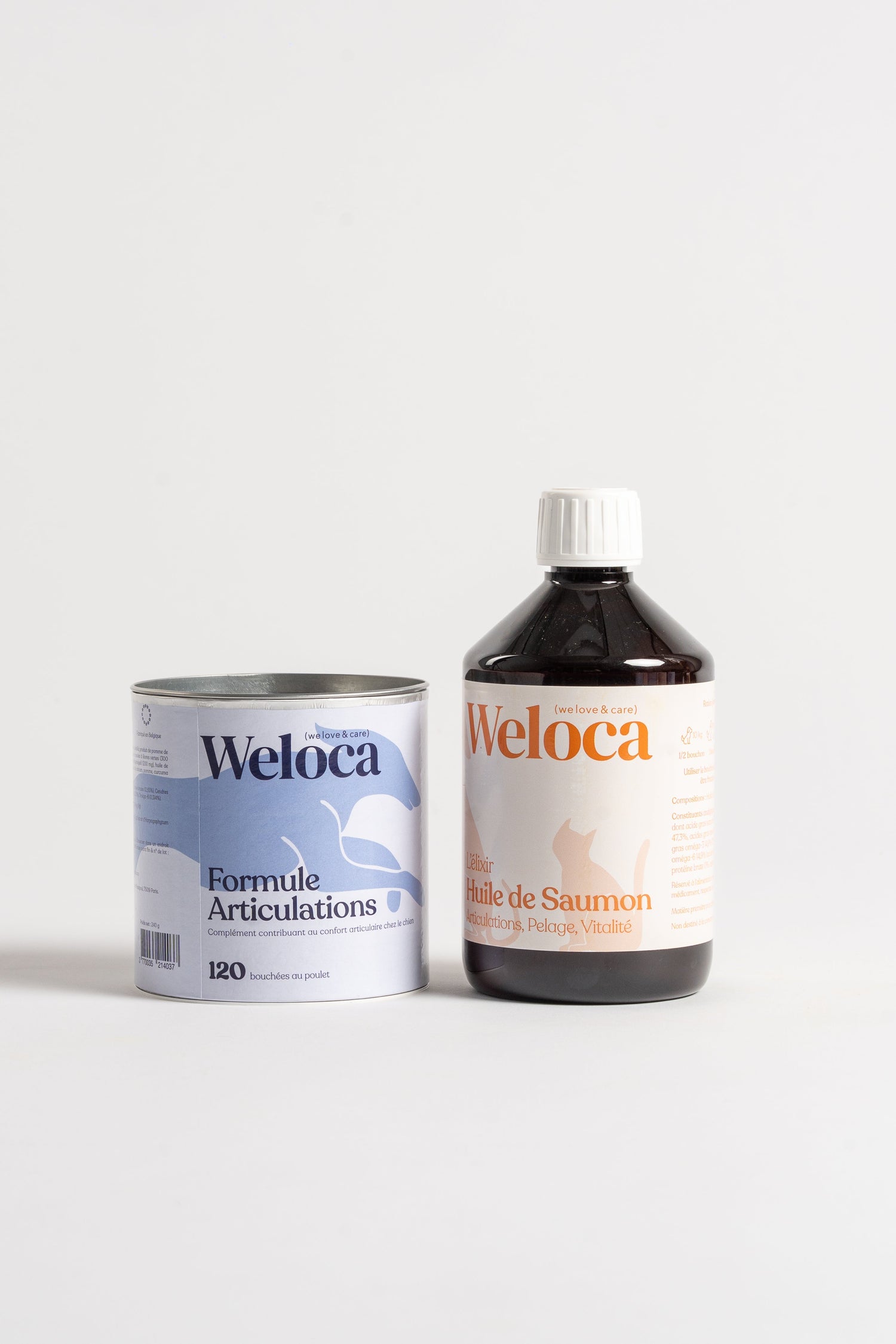
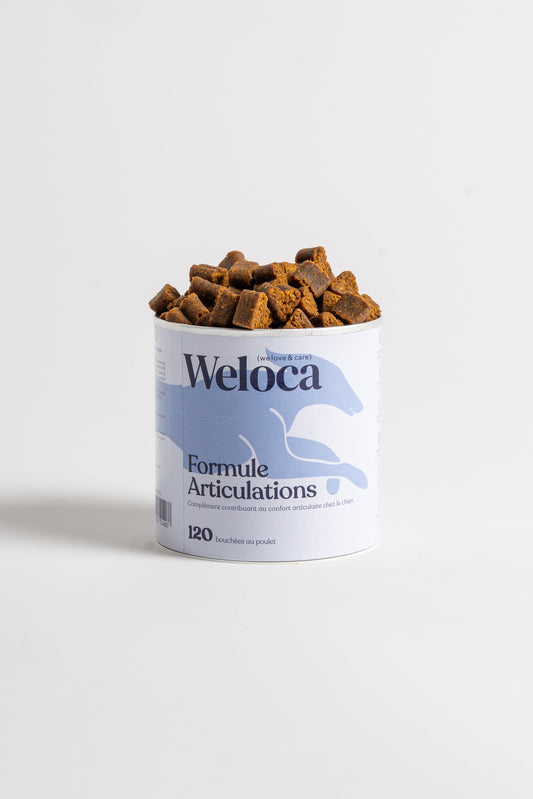
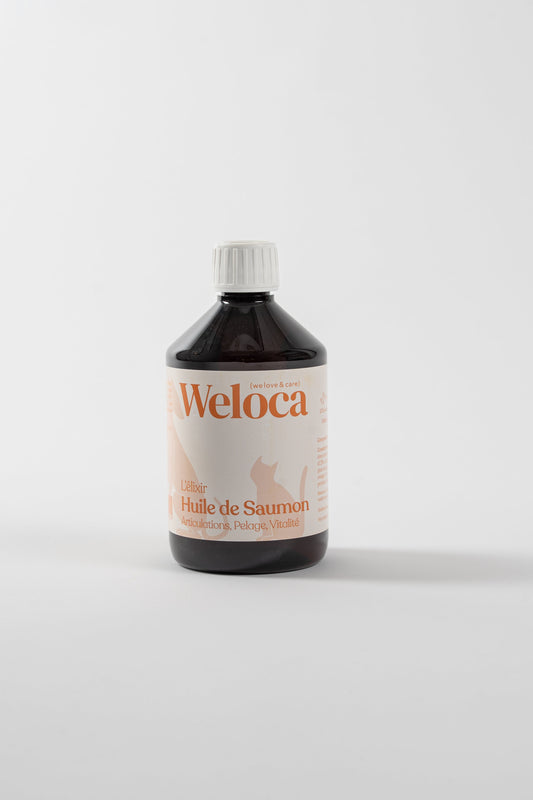
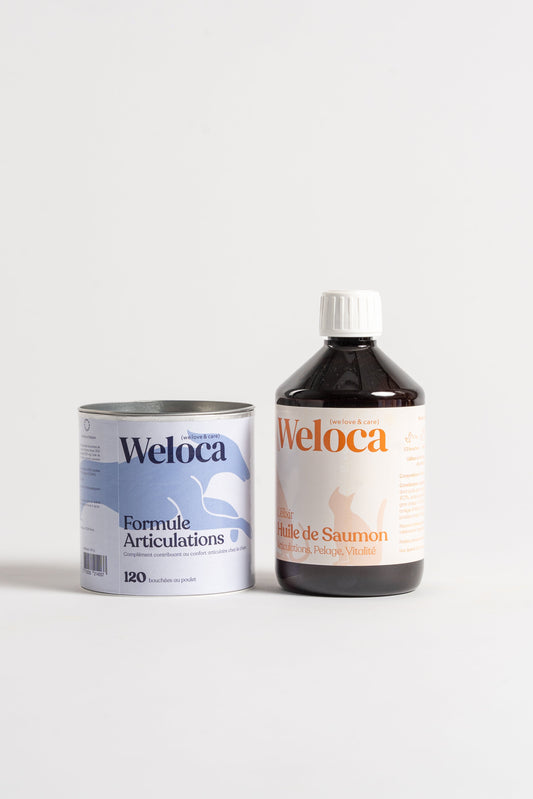
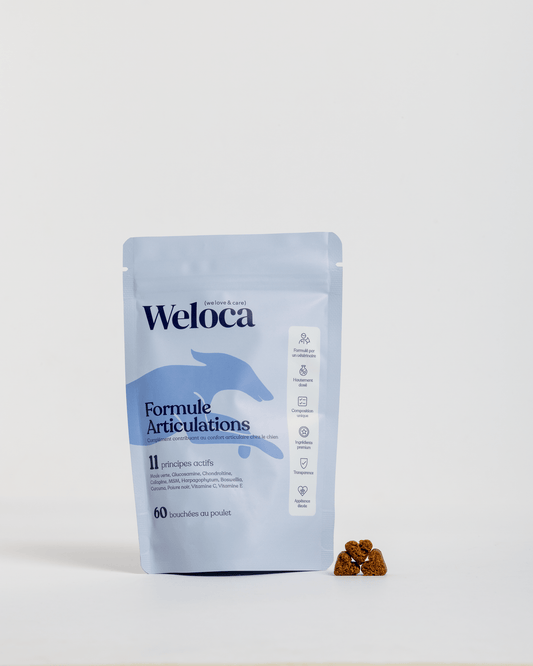
- The Weloca Joint Care combines two complementary supplements that work synergistically: palatable chews (120 chew pot) and pure salmon oil (500 ml). Together, they provide a substantial intake of omega-3s, particularly EPA/DHA, known for their beneficial effect on joint inflammation.
The formula, developed by a veterinarian, combines 11 natural active ingredients including green mussel, devil's claw, and turmeric, all studied for their effects on joint comfort and mobility.
Scientific references:
-
Roush JK et al., Evaluation of the effects of dietary supplementation with fish oil omega-3 fatty acids on weight bearing in dogs with osteoarthritis, JAVMA, 2010.
-
Fritsch DA et al., Efficacy of a therapeutic diet for dogs with signs of osteoarthritis, J Vet Intern Med, 2010.
Weight control of the animal is crucial
Overweight is one of the main aggravating factors of osteoarthritis.
-
Excess weight increases pressure on the joints and accelerates cartilage degradation.
-
Losing weight significantly improves mobility and reduces pain.
-
Your role: regularly monitor your dog's body condition, weigh him, and ask your veterinarian for advice on adjusting his diet if necessary.
This chronic disease does not only affect senior dogs
We often think that osteoarthritis is a "disease of old dogs." This is false.
-
Young dogs can be affected, particularly due to joint malformations (hip or elbow dysplasia) or trauma.
-
Early diagnosis is an asset: the earlier the disease is managed, the more its progression can be slowed down and a better quality of life can be offered to the dog.
Conclusion: Osteoarthritis is not a fatality. By keeping your dog active, providing him with quality omega-3s like those offered in Weloca Joint Care, monitoring his weight, and staying attentive to signs even in young dogs, you can truly improve his daily comfort.