 Money-back guarantee















Arthritis in dogs: what to do? The step-by-step action guide
Does your dog hesitate before jumping into the car, take longer to stand up in the morning, or limp slightly after a long walk? These signs often point to osteoarthritis, a chronic joint disease that affects a large proportion of dogs during their lifetime—not just seniors. When faced with a confirmed or suspected diagnosis, the most frequent question is simple: what can I practically do to help my dog on a daily basis?
This guide provides a point-by-point answer: how to recognize the signs, when to consult, how to adapt the home and outings, what role nutrition plays, and what part food supplements can play in this management. To better understand the mechanisms of this disease and the misconceptions surrounding it, you can also read our article Osteoarthritis in dogs: what you need to know to prevent it from getting worse.
This content is provided for informational purposes and in no way replaces a veterinary consultation.

Contents
- 🚨 Recognizing the warning signs
- 🩺 Step 1: consult a veterinarian
- 💊 Step 2: the prescribed treatment
- 🏠 Step 3: adapting the home
- 🐕 Step 4: physical activity
- ⚖️ Step 5: weight and diet
- 🌿 Step 6: omega-3s and targeted supplements
- 💬 What dog owners have to say
- 📋 Step 7: monitoring progress
- ✅ Summary of the 7 habits
- ❓ FAQ
🚨 Recognizing the warning signs
Before taking action, you must first spot the right signals. Osteoarthritis often sets in gradually, and owners sometimes wrongly attribute it to "getting older." Be alert for:
- 🔸 stiffness or difficulty getting up, especially after resting or in the morning
- 🔸 reluctance to climb stairs, jump into the car, or get on the sofa
- 🔸 intermittent limping, more noticeable after exercise
- 🔸 a drop in enthusiasm for walks or play
- 🔸 repeated licking of the same joint
- 🔸 a change in behavior: irritability, withdrawal, less tolerance to touch
- 🔸 visible muscle wasting in the limbs
If you recognize several of these signs, the first step is not to wait for it to go away, but to consult a vet. Certain profiles are more exposed than others: large breeds (Labrador, German Shepherd, Rottweiler, etc.), overweight dogs, those who have previously had a joint injury, highly athletic dogs, and certain genetically predisposed breeds even of small size (French Bulldog, Yorkshire, Chihuahua). Knowing these risk factors allows you to act preventively, even before the first symptoms appear.
🩺 Step 1: consult a veterinarian for a clear diagnosis
This is the essential starting point. A clinical examination (observation of gait, palpation of joints, searching for painful points) can already guide the diagnosis. Some veterinarians also use chronic pain assessment scales, completed with you, to quantify daily discomfort. Depending on the case, the veterinarian may then suggest:
- X-rays (generally expect between €50 and €120) to evaluate the condition of the cartilage and joints
- blood tests, to rule out other causes of pain or check general health before treatment
- in more complex cases, an ultrasound or a more advanced imaging examination
This diagnosis has a dual purpose: to rule out other pathologies that cause similar symptoms (cruciate ligament rupture, dysplasia, bone tumor, etc.) and to establish a baseline for monitoring the progression of the disease over time. Do not hesitate to ask for a second opinion if the symptoms persist despite initial treatment.
⚠️ A habit to strictly avoid: never give human pain medication (paracetamol, ibuprofen, etc.) to your dog. These molecules are toxic to them, sometimes even in very small doses. Only a veterinarian can prescribe pain relief treatment adapted to their weight and state of health.
💊 Step 2: implement the treatment prescribed by the veterinarian
If the diagnosis confirms osteoarthritis, your veterinarian may suggest, depending on the severity:
- veterinary anti-inflammatories to manage painful flare-ups
- painkillers adapted to managing chronic discomfort
- in more advanced forms, targeted injections (monoclonal antibodies, infiltrations)
- regular biological follow-up in case of long-term treatment, to monitor the liver and kidneys
This treatment forms the foundation of the care. Everything that follows in this guide is in addition to—never a replacement for—your veterinarian's recommendations.
🏠 Step 3: adapting the home for daily life
Small adjustments to your dog's environment can significantly improve their comfort:
- 🛏️ a thick and well-padded bed, to limit pressure on the joints
- 🧻 non-slip mats on slippery floors (parquet, tile), to avoid false movements and falls
- 🪜 a ramp or small steps to access the car, the sofa, or the bed, rather than letting them jump
- 🥣 raised bowls if the osteoarthritis also affects the neck or shoulders
- 🌡️ a resting area protected from cold and humidity, which are particularly uncomfortable for joints
- 🦺 a support harness to help them climb stairs or get up, especially for large-breed dogs
- 🧦 non-slip slippers or socks if your dog frequently slips on hard floors
In more advanced cases, your veterinarian may also refer you to a functional rehabilitation center for dogs: these facilities offer physiotherapy sessions, therapeutic laser, or electrostimulation, supervised by professionals trained in canine rehabilitation.
🐕 Step 4: rethink physical activity — not too much, not too little
Contrary to a common misconception, complete rest is not the solution: inactivity leads to muscle wasting, which further weakens joints and accelerates the loss of mobility. The goal is to find the right balance:
- 🚶 favor short, regular walks rather than a single long, intense outing
- 🚫 avoid high-impact activities: repeated jumping, sudden running, aggressive tug-of-war games
- 🏊 swimming or hydrotherapy is particularly suitable: it helps strengthen muscles without bearing the body's weight on the joints, and many canine centers now offer individual sessions
- 😴 ensure sufficient recovery time after exercise, especially the day after a more active outing
- 👀 observe your dog's reaction after each outing: discomfort that persists for more than 24 hours is a sign that you need to reduce the intensity next time
⚖️ Step 5: monitor weight and adjust diet
Overweight is one of the most critical levers in the progression of osteoarthritis: every extra kilo increases the mechanical load borne by already weakened joints and accelerates cartilage wear. Practically speaking:
- have your dog weighed regularly and track their weight curve with your veterinarian, aiming for an optimal body condition score
- adjust portions to the gram rather than "by eye," and limit overly rich food rewards between meals
- ask for advice on food adapted to their age and activity level, especially for senior or overweight dogs
- in case of prescribed weight loss, proceed gradually: losing weight too quickly can also weaken the body
🌿 Step 6: support mobility with omega-3s and a targeted supplement
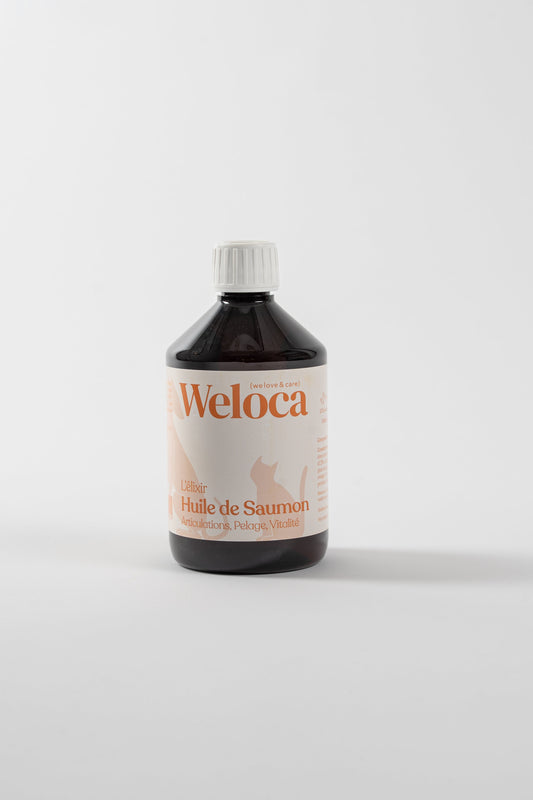
Among the nutritional actives regularly used to support daily joint comfort, omega-3s (EPA and DHA), found notably in fish oil, play a central role. Several veterinary studies have examined the benefit of regular omega-3 supplementation to support the mobility of dogs with sensitive joints, alongside other well-known actives: glucosamine and chondroitin, which occur naturally in cartilage, green-lipped mussel (Perna canaliculus), MSM (methylsulfonylmethane), as well as plant extracts like harpagophytum, turmeric, or boswellia, which are traditionally associated with mobility comfort.

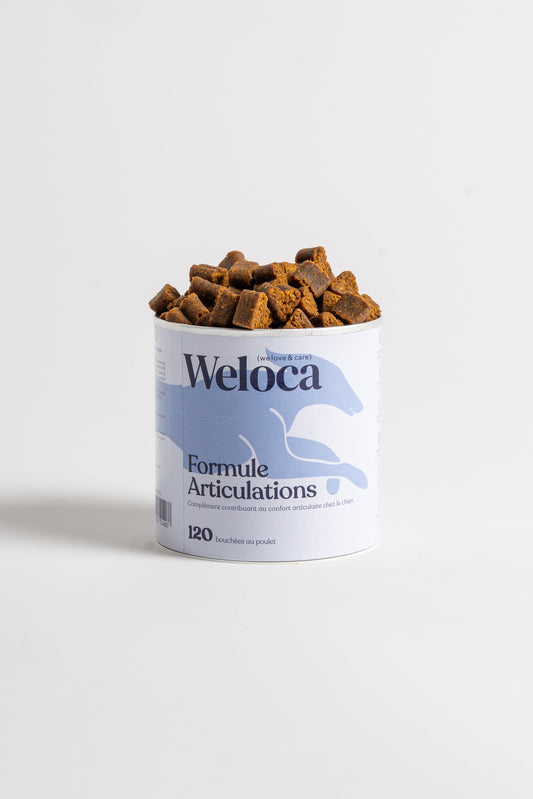
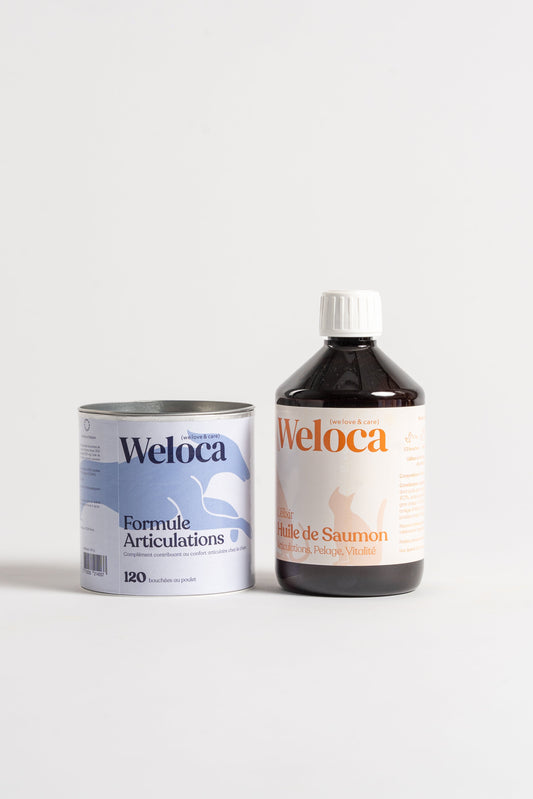
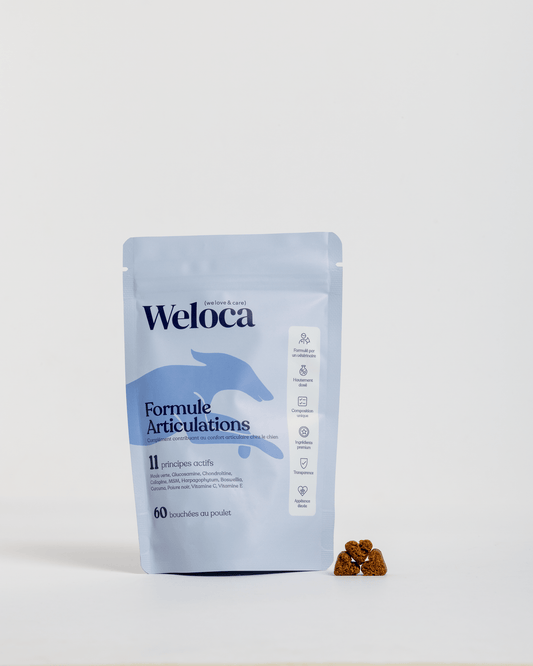
It is with this in mind that we, together with veterinarians, designed our Joint Supplement: palatable bites combining an omega-3 source (salmon oil) with 10 other targeted actives—glucosamine, chondroitin, green-lipped mussel, MSM, collagen, harpagophytum, boswellia, turmeric, and vitamins C and E—dosed according to the dog's weight and designed to fit easily into the daily routine. The format was also designed for picky dogs, with a high palatability rate measured at 98%. It is used in a course of at least 3 months, as a supplement to—never a replacement for—veterinary treatment when it is necessary.
As with any food supplement, ask your veterinarian for their opinion before starting a course, especially if your dog is already on medication.
💬 What dog owners have to say
Our Joint Supplement is now used by over 500 dog owners in Europe, with an average rating of 4.7/5 on the product page. Many testimonials mention dogs gradually regaining energy during walks, or climbing stairs with more ease again after several weeks of regular use.
Every dog reacts differently, and results depend on many factors (age, stage of osteoarthritis, consistency of the course, veterinary support)—which is why we recommend a course of at least 3 months to form an accurate opinion.
👉 Read customer reviews on the product page
📋 Step 7: monitor progress and know when to worry more
Osteoarthritis is a progressive disease: regular follow-ups allow for adjustments to care over time.
- 📅 schedule follow-up consultations with your vet, even in the absence of new symptoms
- 📝 note what you observe over the weeks (mobility, appetite, mood) to quantify changes
- 🆘 consult urgently in case of sudden limping that doesn't go away, sudden swelling of a joint, total refusal to get up or put weight on a leg, or acute pain
With appropriate care, most dogs with osteoarthritis maintain a good quality of life and a normal life expectancy.
✅ Summary: the 7 habits to adopt
- 🚨 Spot the first signs (stiffness, limping, reluctance to jump)
- 🩺 Consult a veterinarian for a precise diagnosis
- 💊 Follow the prescribed medical treatment, with no self-medication
- 🏠 Adapt the home (bedding, non-slip mats, ramps)
- 🐕 Manage physical activity: short and regular outings, swimming
- ⚖️ Monitor weight and adjust the diet
- 🌿 Support mobility with omega-3s and a targeted supplement, in agreement with the vet
❓ FAQ — Your questions about canine osteoarthritis
Does osteoarthritis only affect older dogs?
No. Although the risk increases with age, young dogs can develop osteoarthritis, particularly after an injury, a joint malformation (dysplasia), or within certain predisposed breeds. Early diagnosis helps slow its progression—we detail this point in our article Osteoarthritis in dogs: what you need to know to prevent it from getting worse.
Should you keep walking a dog with osteoarthritis?
Yes, but differently: short and regular outings are better than one long, occasional outing. Complete immobility worsens muscle wasting and stiffness.
How long before seeing an effect from food supplements?
Generally expect 4 to 6 weeks of regular use before starting to notice a difference in movement comfort, which is why it is worth using them in courses of several months.
Can I give my dog paracetamol or ibuprofen for pain?
No, under no circumstances. These molecules, common in human medicine, are toxic to dogs, even in low doses. Only a veterinarian can prescribe appropriate pain relief treatment.
Is osteoarthritis reversible?
No: it is a chronic and progressive disease; cartilage damage does not regenerate spontaneously. However, appropriate care—weight, activity, treatment, nutritional support—allows you to slow its progression and preserve the dog's quality of life long-term.
Are "joint special" kibbles enough?
They can be a useful component of care, but they do not replace a prescribed veterinary treatment, nor do they replace other measures (weight, activity, home adaptation). Their content of joint actives is generally more diluted than that of a dedicated food supplement taken as a targeted course.
When is surgery considered?
Surgery remains an option reserved for the most severe cases, when medical treatment and home adjustments are no longer enough to maintain proper mobility, or in the presence of an operable underlying cause (cruciate ligament rupture, severe dysplasia). Your veterinarian, possibly in consultation with an orthopedic surgeon, evaluates this indication on a case-by-case basis.
🐾 In summary
When dealing with your dog's osteoarthritis, every action counts: an early veterinary diagnosis, an adapted environment, moderated physical activity, monitored weight, and targeted nutritional support all form a complete care plan. Our Joint Supplement can be part of this approach, alongside your veterinarian's advice.