Dog oral health
How to clean my dog's teeth naturally?
Tartar, bad breath, sensitive gums… There are effective solutions to care for your dog's mouth — without chemical toothpaste, and without stressing them out.
Are you looking to clean your dog's teeth without toothpaste? You're not alone. Brushing remains one of the most dreaded tasks for owners — and dogs. However, dental health is a serious issue: tartar buildup can lead to gingivitis, chronic pain, and even infections that affect vital organs.
The good news? There are natural alternatives, validated by veterinarians, to maintain a healthy mouth daily. In this article, we'll guide you step by step.
Why dog dental health is often neglected (and why it's risky)
It is estimated that over 80% of dogs over 3 years old show signs of periodontal disease. Yet, few owners incorporate regular dental care into their routine. The reasons are often the same: the dog refuses brushing, toothpaste leaves traces, the session turns into a struggle.
The problem is that untreated tartar eventually leads to painful gingivitis, gum recession, and ultimately tooth loss. Oral bacteria can even enter the bloodstream and reach the heart, kidneys, or liver.
🔎 Warning signs
Persistent bad breath · yellowish or brownish deposits on teeth · red or bleeding gums · difficulty chewing · refusing certain toys · excessive drooling. If several of these symptoms are present, a veterinary consultation is necessary first.
5 natural methods to clean your dog's teeth without toothpaste
1
Natural chew toys
Chewing is the primary self-cleaning mechanism for dogs' teeth. By rubbing against the tooth surface, hollow rubber toys, deer antlers, or chew bones (natural, uncooked) act as a gentle abrasive. Choose according to your dog's size and chewing power to avoid splintering.
2
Raw diet or crunchy vegetables
Raw carrots, apples (without seeds), celery, or zucchini mechanically remove tartar and stimulate salivation, which also has a cleaning effect. Give as a daily snack or incorporate into their meal. Large kibble has the same mechanical effect, unlike wet food which sticks to teeth.
3
Brushing with coconut oil or aloe vera gel
If your dog accepts brushing, virgin coconut oil is an excellent alternative to conventional toothpaste: its natural antimicrobial properties limit bacterial proliferation in the mouth. Aloe vera gel, meanwhile, soothes inflamed gums. Start by gently rubbing with your finger before introducing a special dog toothbrush.
4
The seaweed Ascophyllum nodosum
This is the star ingredient for natural dental hygiene in dogs. This brown seaweed, when incorporated into the diet, changes the composition of saliva and reduces tartar adhesion to the teeth. Numerous veterinary studies confirm its effectiveness with continuous use. It is usually available as a powder to sprinkle on food.
5
Oral dietary supplements
This is the simplest long-term solution: a powdered supplement to sprinkle directly on the food, no brushing, no hassle. The most effective formulas combine anti-tartar seaweed, probiotics for the oral microbiome, and antioxidant active ingredients like green tea or pomegranate for healthy gums. Choose a veterinary formula with traceable ingredients if possible.
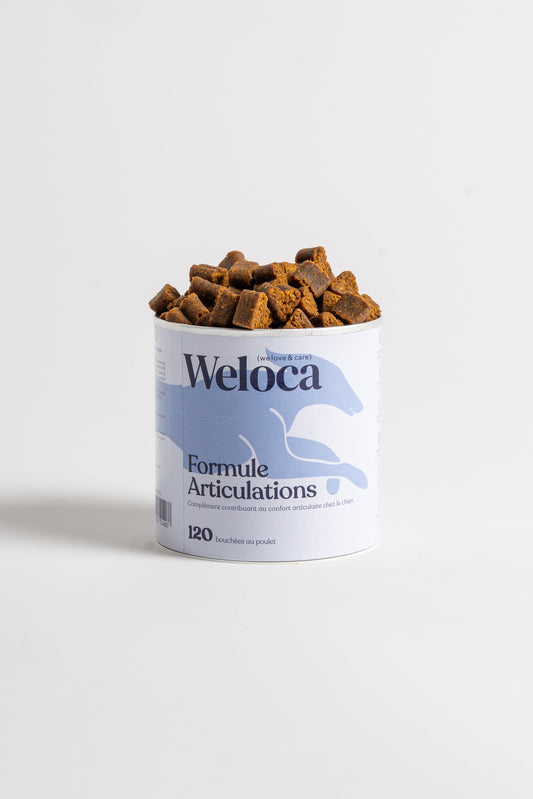
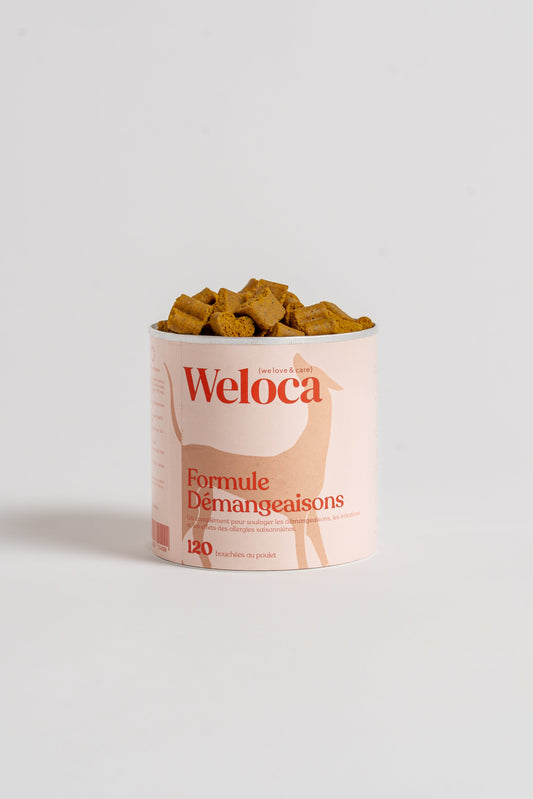
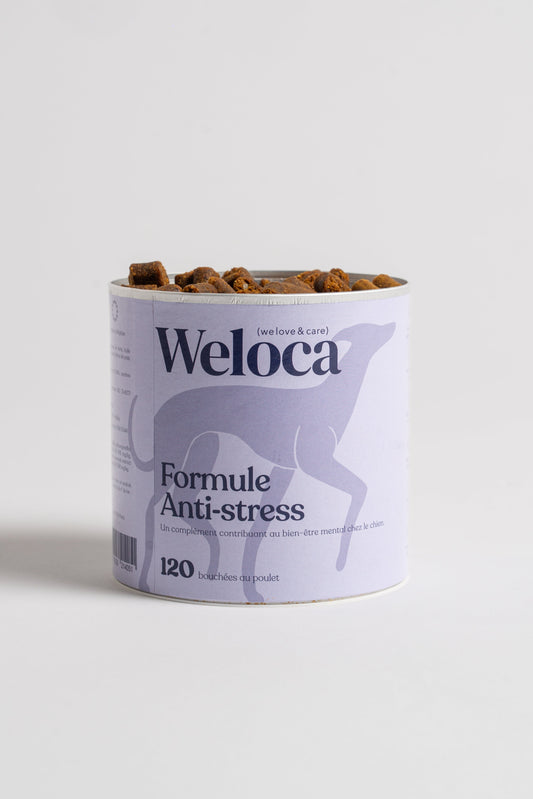
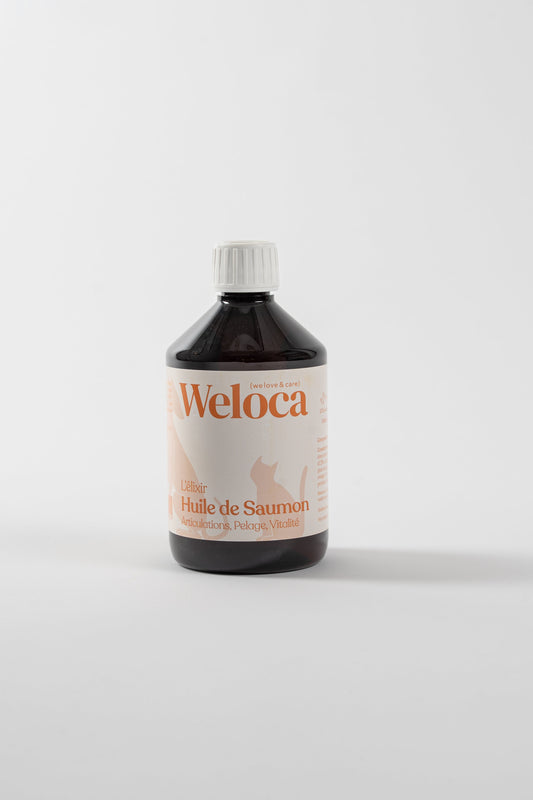
Our Weloca recommendation

|
Oral Hygiene Supplement
Veterinary formula · 8 natural active ingredients · Powder to sprinkle on food · 50 doses
| 🌿 |
Ascophyllum nodosum — the most studied anti-tartar seaweed in veterinary medicine |
| 🍵 |
Green tea & pomegranate — rich in antioxidant polyphenols for healthy gums |
| 🦠 |
Probiotics & FOS prebiotics — to balance oral flora and reduce bad odors |
| ✅ |
Bacillus velezensis DSM 15544 — EFSA certified zootechnical probiotic dosed at 200M CFU/g |
No brushing · Palatable formula · For continuous use · From €0.44/day
Discover the supplement →
|

How to establish a lasting dental routine?
The key is regularity without constraint. Daily dental action, even simple, is infinitely more effective than intensive brushing once a week. Here's a progressive approach for lasting results:
| Frequency |
Recommended action |
Objective |
| Every meal |
Sprinkle a powdered supplement on food |
Limit tartar buildup, fresh breath |
| 3-4 times/week |
Chew toy or crunchy vegetable (carrot, apple) |
Natural mechanical cleaning |
| 1-2 times/week |
Visual inspection of the mouth |
Detect early signs of irritation |
| Once/year |
Veterinary check-up with dental inspection |
Descaling if necessary, professional monitoring |
For dogs reluctant to brushing, powdered supplements on food are often the only long-term solution — because they demand nothing from the animal and very little from the owner.
Precautions to follow
Not all approaches are equal, and some common habits can be dangerous:
❌ Never use
Human toothpaste — fluoride is toxic to dogs · Hydrogen peroxide — irritating and dangerous if swallowed · Cooked bones — splinter and can perforate the digestive tract · Large amounts of baking soda — too abrasive for enamel.
✅ What veterinarians recommend
Prioritize active ingredients with scientifically backed efficacy, such as Ascophyllum nodosum seaweed, certified probiotics (EFSA), or plant polyphenols. Prefer short, traceable formulas, without fillers.
Frequently asked questions
▶ Can my dog clean his teeth by himself by chewing?
Chewing helps to limit dental plaque through mechanical friction, but it is not enough on its own to prevent tartar. Dogs that chew a lot (toys, natural bones) generally have better dental hygiene, but it is still necessary to combine it with a complementary solution — especially to act on the composition of saliva and the oral microbiota.
▶ Is apple cider vinegar effective for dogs' teeth?
Apple cider vinegar is sometimes mentioned as a home remedy, but its acidity can, in the long term, attack dental enamel and irritate the oral mucous membranes. Its effectiveness has not been scientifically proven for dogs. It is preferable to opt for active ingredients whose efficacy and safety profile has been validated by veterinarians.
▶ At what age should you start caring for your dog's teeth?
The earlier, the better. Ideally, as soon as the puppy arrives, so that it gets used to oral handling. Plaque forms very quickly and calcifies into tartar in a few days. For adult dogs that have never had dental care, starting with a food supplement is often the gentlest and most effective way to establish a routine without conflict.
▶ How long does it take to see results with an oral health supplement?
The first effects on breath are generally noticed within the first 2 to 3 weeks of regular use. The action on tartar is gradual and requires continuous use over several weeks to months, depending on the initial condition of the mouth. Supplements based on Ascophyllum nodosum have shown significant results in 8 to 12 weeks in clinical studies.
▶ Do oral supplements replace veterinary descaling?
No, they do not replace descaling under anesthesia when it is medically necessary. However, a regular dental hygiene routine can significantly extend the time between veterinary descaling procedures, or even avoid them in the long term for dogs without a particular predisposition. The goal is never to let tartar build up to the point of requiring intervention.
The no-brushing solution
A spoonful on the bowl, every day.
Weloca Oral Hygiene Supplement acts on bad breath, tartar and gums — without any hassle for your dog, or for you.
Discover Weloca supplement →
 Money-back guarantee