 Money-back guarantee










How to treat a raw paw pad in a dog?
How to Treat a Dog's Raw Paw Pad
A raw paw pad can be very painful for a dog: they may limp, sometimes refuse to walk, continuously lick their paw, and even whimper when touching the ground. Even though paw pads are naturally tough, they remain exposed to burns, cuts, friction, or aggressive surfaces.
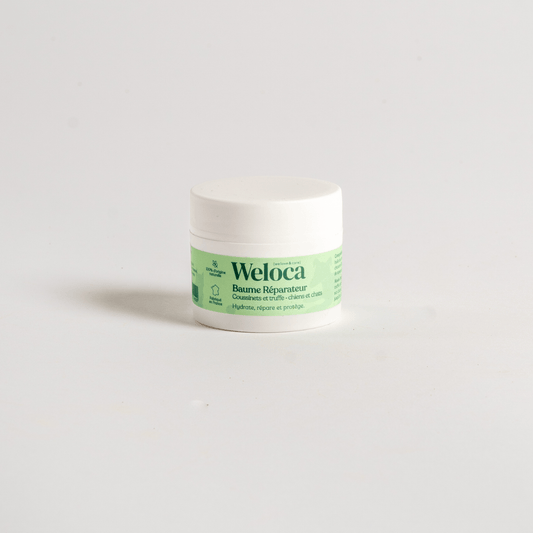
In this article, we will look at how to react step-by-step, when to consult a veterinarian, and how a suitable restorative balm can potentially accelerate healing – particularly the Weloca Paw Pad Restorative Balm.
Why is my dog's paw pad raw?
A paw pad can become raw due to:
- Walking on an abrasive surface (gravel, rocks, hot asphalt, stony ground).
- Thermal burns (burning asphalt in summer, frozen or salted ground in winter).
- Cuts or punctures (glass, metal, thorns, shells, etc.).
- Repeated friction (long hikes, intense sport, rough surfaces).
- Contact with an irritating product (household cleaner, detergent, fertilizer, etc.).
- Weakened or dry skin, which cracks more easily.
In all cases, a raw paw pad should be considered a real wound that requires care similar to that of a classic skin injury.
Step 1: Gently clean the paw pad
The first thing to do is to clean the area to remove dirt, dust, small gravel, or debris.
- Settle your dog in a quiet place, on a clean towel.
- Gently rinse the paw with lukewarm water (neither too hot nor icy).
- If necessary, use a very mild soap or an antiseptic suitable for dogs (such as diluted chlorhexidine).
- Rinse well, then pat dry, without rubbing.
If you see a foreign body deeply embedded (large piece of glass, metal, embedded thorn) or a very deep wound, it is best not to try to remove it yourself and consult a veterinarian.
Step 2: Disinfect the paw pad wound
Once the area is clean, move on to disinfection to limit the risk of infection.
- Apply a mild antiseptic for veterinary use or recommended for dogs.
- Avoid alcohol and overly aggressive products, which can burn and delay healing.
- Let it air dry for a few moments before proceeding.
This step might sting slightly: reassure your dog, speak to them softly, and don't hesitate to have two people if needed (one person to hold, one to treat).
Step 3: Protect with a suitable bandage
When the paw pad is raw, every step on the ground is painful and risks reopening the wound. A well-applied bandage helps protect the area.
- Place a non-adherent sterile compress on the paw pad.
- Wrap the paw with a flexible band (cohesive bandage type), without tightening too much.
- Always leave a gap for 2 fingers between the bandage and the skin to avoid cutting off circulation.
- Inside the house, you can leave the paw uncovered if the floor is clean and the wound is well protected.
Outdoors, a bandage or a protective sock/bootie can be useful, especially on rough or dirty surfaces.
Step 4: Accelerate healing with Weloca's fragrance-free restorative balm
Beyond cleaning and disinfection, one of the major levers for promoting good healing is the regular application of a restorative treatment suitable for paw pads, i.e., fragrance-free and non-harmful if the animal licks it.
The Weloca Paw Pad Restorative Balm, made in France, has several benefits:
- hydrates and nourishes damaged skin,
- forms a protective film against external aggressions,
- soothes discomfort related to the wound,
- accelerates healing thanks to carefully chosen natural ingredients,
- is safe to use even if the dog licks the area slightly after application.


How to use it in practice?
- Clean and dry the paw pad.
- Apply a thin layer of balm directly to and around the raw area.
- Allow to penetrate for a few moments before eventually re-applying a bandage.
- Repeat 1 to 3 times a day depending on the condition of the paw pad and the product's recommendations.
Day-by-day care plan
Here is a simple protocol example for a mild to moderate raw paw pad (without deep tearing):
| Day | Actions | To monitor |
|---|---|---|
| Day 1 | Cleaning + antiseptic + Weloca restorative balm + bandage if needed. | Limping, bleeding, significant pain. If the dog completely refuses to bear weight: vet's advice. |
| Day 2 | New cleaning, light antiseptic, balm morning and evening. Bandage for outings. | Check for absence of pus, strong odor, or widening wound. |
| Days 3 to 5 | Balm 1 to 2 times a day. Short walks on soft ground (grass). | Gradual reduction of limping and sensitivity to touch. |
| Days 6 to 10 | Balm once a day for maintenance. Gradual return to normal activity. | Paw pad less red, smoother skin, no more pain when walking. |
When to consult a veterinarian urgently?
Make an appointment quickly if:
- the wound is very deep or wide,
- the paw pad is torn or a flap is hanging,
- the dog is not putting any weight on the paw at all,
- there is pus, a bad smell, intense heat around the wound,
- the pain is very severe despite basic care,
- you suspect a chemical burn or a toxic product.
A veterinarian may then be able to perform stitches, prescribe antibiotics, pain relievers, or adapt the treatment.
How to prevent it from happening again?
- Limit outings on burning asphalt in summer (if it's too hot for your hand, it's too hot for them).
- Rinse and dry paws after winter walks on salted snow.
- Avoid overly abrasive terrain if your dog is not used to it (rocks, gravel).
- Use a protective balm on paw pads as a preventative measure before prolonged efforts.
- Regularly check the condition of the paws after long walks or sports activities.
In summary
A raw paw pad is never insignificant for a dog: it's painful, and healing can be a bit slow because the area is heavily used. By following a simple routine – clean, disinfect, protect, apply a restorative balm – you can truly help your companion regain comfort quickly.
The Weloca Paw Pad Restorative Balm can potentially accelerate healing and strengthen the skin barrier, in addition to veterinary care when necessary.
In case of doubt, significant pain, or a wound that does not improve, veterinary consultation remains essential.
❓ FAQ – All About Treating Raw Paw Pads
My dog has a raw paw pad, what should I do first?
Start by cleaning the wound with lukewarm water, gently dry, apply a mild antiseptic, then a restorative treatment. Then, protect the paw with a light bandage, especially for outdoor excursions.
Can I put Betadine on a damaged paw pad?
Yes, in a diluted dermolavage version, never pure. Diluted chlorhexidine is also a good option. When in doubt, always ask your veterinarian for advice.
Can restorative balm replace veterinary care?
No. The balm helps protect, moisturize and can potentially accelerate healing, but it does not replace a consultation if the wound is deep, very painful or infected.
Can I leave the paw without a bandage?
Yes, if the wound is no longer bleeding and your environment is clean. The bandage is especially useful for the first few days and outdoors, to prevent the wound from reopening or getting dirty.
How long does it take for a paw pad to heal?
For a minor injury, it often takes 7 to 10 days. For a more severe wound, up to 2 to 3 weeks may be necessary. A well-chosen restorative balm can help improve comfort and speed of healing.
My dog is limping after treatment, is this normal?
Slight limping is common in the first few days. However, if the limping persists for more than 5 days or worsens, it is wise to consult a veterinarian.
Can dog booties be used to protect the paw pad?
Yes, especially outdoors. Indoors, it is better to let the skin breathe to promote healing, while keeping the area clean.
How do I prevent my dog from licking the wound?
Use an Elizabethan collar, a paw sleeve, or a light bandage. Repeated licking delays healing and increases the risk of infection.
Is Weloca restorative balm safe if licked?
The Weloca Paw Pad Restorative Balm is formulated to be safely used on dog and cat paw pads, including in case of moderate licking after application.
Is it normal for a paw pad to heal slowly?
Yes, paw pads are thick and heavily used structures: healing can be a little slower than on other skin areas. That's why regular care with a suitable balm is particularly useful.